A one-size-fits-all approach to mental health does not work, especially in communities that have historically been left out of the conversation entirely. For BIPOC Mental Health Awareness Month, we are highlighting something we believe deeply: training matters, and who delivers that training, how it’s shaped, and whether it reflects the lived experience of the people receiving it matters just as much.
As we’ve talked about, mental health challenges don’t look the same across every community. The barriers to getting support, cost, mistrust of institutions, stigma, and a lack of providers who share a community’s culture and lived experience are real and well documented. Culturally responsive trainings help address these obstacles. They equip the people communities already trust, teachers, faith leaders, barbers, coworkers, community leaders, and neighbors, with the tools to recognize when someone is struggling and to respond in a way that feels safe and familiar. It closes the gap between knowing something is wrong and knowing what to do about it. Our Equity and Cultural Engagement team offers multiple trainings designed with this in mind.
Mental Health First Aid is an eight-hour, interactive program that teaches participants to identify, understand, and respond to signs of mental illness and substance misuse. Participants learn to separate myth from fact, practice real-world crisis response skills, recognize early warning signs, and care for their own well-being while supporting others.
QPR, which stands for Question, Persuade, Refer, is a training built for anyone who wants to understand their role in preventing suicide. It teaches participants to recognize when someone may be at risk, ask directly and compassionately about thoughts of suicide, and connect that person to professional help with confidence.
Be Sensitive, Be Brave is a three-hour workshop that integrates culture and diversity directly into suicide prevention and mental health education. It is designed for community members of all backgrounds and specifically addresses how mental health and suicide prevention show up differently across cultures, helping participants tailor their support to the person in front of them rather than applying a generic script.
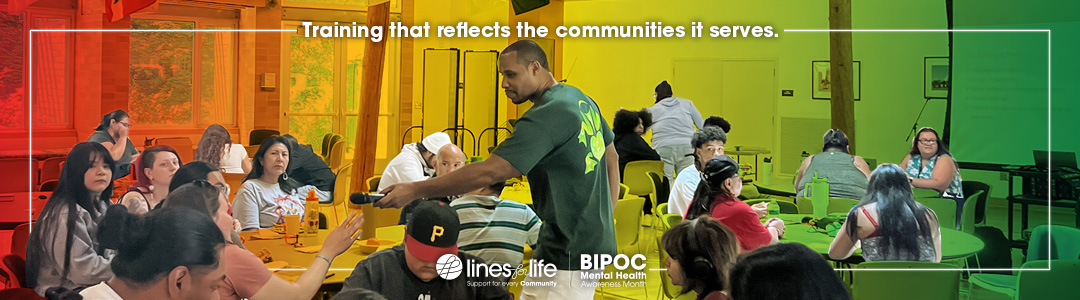
Each of these trainings is nationally accredited, evidence-based, and offered in a flexible in-person or virtual format built to fit a community’s needs. More than that, each is grounded in partnership. Our Equity and Cultural Engagement team works directly with community-based organizations to shape training that reflects the people it is meant to serve, rather than asking communities to adapt to a program that was never built with them in mind. Investing in this kind of training strengthens more than an individual’s skill set. It strengthens a community’s capacity to look out for itself, catch a crisis early, and make sure no one feels like mental health support is something meant for someone else.
If your organization, school, or community group is interested in bringing culturally specific mental health training to your team, learn more and get in touch through our training opportunities page.