During National BIPOC Mental Health Awareness Month, we’re recognizing the unique strengths, challenges, and barriers that shape mental health in communities across Oregon.
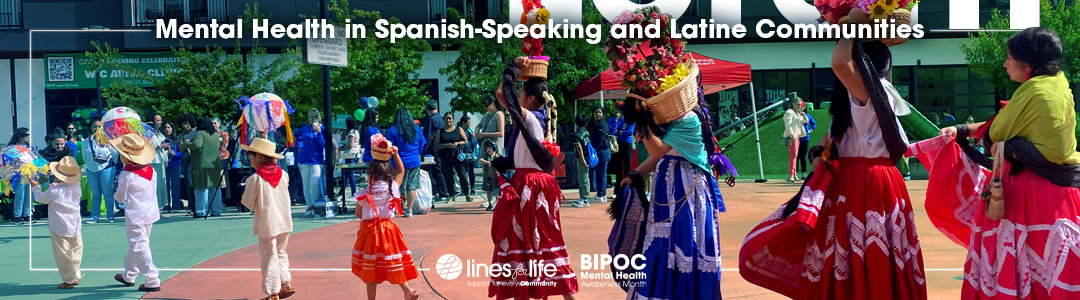
In many Spanish-speaking and Latine households, mental health struggles are real but often go unnamed.
For immigrant families, that weight is compounded. Financial strain and the pressure to keep working create layers of stress that build quietly over time. Rest can feel like a luxury and asking for help can feel like a failure.
For many members of these communities, the barriers to mental health care are specific and rooted in culture, economics, and systemic inequity.
Cost puts care out of reach for many families. Stigma frames help-seeking as weakness rather than strength. Machismo discourages men from acknowledging struggle, while marianismo places an equally heavy burden on women with the expectation of selfless caretaking that leaves little room for their own needs. A lack of accessible resources and a shortage of Spanish-speaking providers mean that even when someone is ready to seek help, culturally responsive care can be hard to find.
The path forward requires removing those barriers directly: free resources, providers who reflect the community, and wraparound support that addresses not just mental health, but the stressors underneath it — food access, legal help, stable work, etc.
One of the most powerful expressions of this approach is the Charlas, a community wellness program developed in partnership with Raíces de Bienestar and offered through Lines for Life’s Equity and Cultural Engagement team. Designed for Latine families, the Charlas create space to talk about mental health as it shows up in their own community, with practical tools like grounding techniques, boundary setting, and mindfulness all through a community-first model.
A recent Charla focused on rest. In many immigrant communities, sleep is seen as a negative, proof that you’re not working hard enough. Several women in the group shared how this belief had taken a physical toll, with chronic migraines and headaches tied directly to not resting. Together, the group found real, practical ways to reclaim rest: a short nap during the week, a few deep breaths on a work break, a moment of mindfulness on the commute home. Small acts made possible by community and shared experiences.
The Charlas are open to Latine community members across Oregon. If you or someone you know would like to join the next virtual session, sign up today.