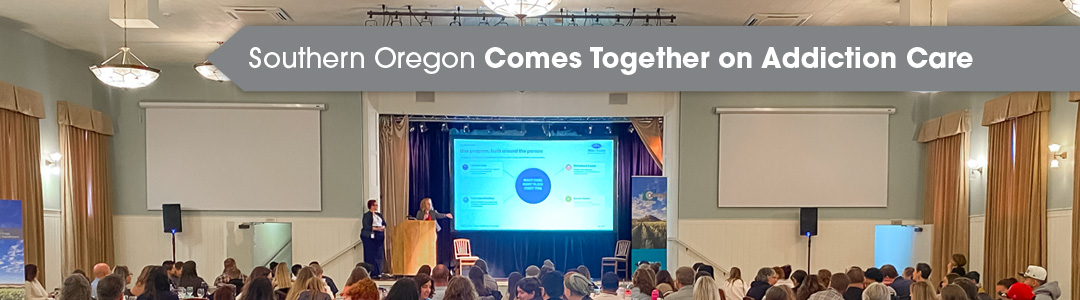
On Nov. 13, more than 200 people gathered at Bigham Knoll in Jacksonville, Oregon, for our first regional Opioids and Other Drugs, Pain and Addiction Treatment (OPAT) Summit. Lines for Life and the Oregon Health Authority (OHA) host the OPAT Summit statewide each year, and this time we brought the conversation to Southern Oregon with a one-day regional summit in partnership with Jackson Care Connect. Funded by OHA, the free event featured four sessions exploring the continuum of care, from prevention and early intervention to specialized treatment, clinical care, and crisis response.
One of the day’s most impactful conversations came from the youth panel. The young people on it shared their experiences growing up and what it took to access the care they needed, and they were honest about the additional barriers young people can face in rural communities, especially for those who are also LGBTQIA+. It’s one thing to read about those barriers and another to hear directly from the people experiencing them. We’re grateful to everyone who was willing to share.
Another important takeaway was how much clinical work is already happening in the region, something many attendees hadn’t fully realized. Addressing substance use requires more than community support and prevention efforts. It also requires accessible, evidence-based treatment and clinical care that are integrated into the broader continuum of services. Dr. Daniel Weiner spoke about evidence-based treatment, and attendees learned about a collaboration between YouthLine and La Clinica on a teen intervention program. With relatively few clinics in Southern Oregon and often long wait times for appointments, expanding access also means training more providers and equipping community members with skills like administering naloxone (Narcan) and performing CPR.
Mark Harmon, who works with youth going through treatment, spoke about the role of family, a perspective that resonated with attendees. Sometimes family can be a barrier to care, which is why he brings family in only when they’re a safe resource and space. He talked about extending education and treatment to the people surrounding a young person, not just the individual receiving care. Conversations also turned to culturally grounded care for Latine communities and the importance of going beyond language, because a culturally grounded approach has to take people’s beliefs into account as well as the words they speak.
Southern Oregon was the first of three regional summits, with Tri-County and Eastern Oregon coming next. Thank you to OHA and Jackson Care Connect for making the day possible, and to all our speakers and panelists. Keep an eye out on the Lines for Life Events Calendar and our social media channels for the final two OPAT Summit dates. We’d love to see you there!