For More Information, Contact:
Jered Weber
Communications Director
Lines for Life
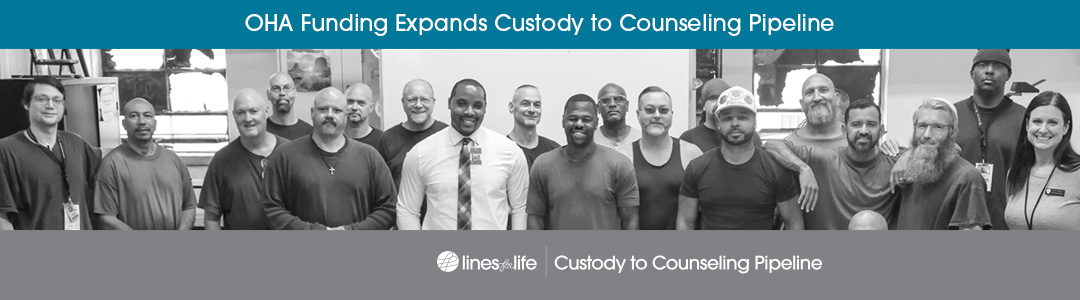
OHA Funding Expands Custody to Counseling Pipeline
Lines for Life and its partners will train adults in custody for careers in behavioral health.
PORTLAND, Ore. — Thanks to funding from the Oregon Health Authority (OHA), Lines for Life is expanding its innovative Custody to Counseling Pipeline program, which prepares adults in custody for employment as addiction treatment counselors when they return to their communities. This initiative is the first of its kind in the nation and will help Oregon address the behavioral health workforce crisis in the state and improve access to effective treatment and recovery for Oregonians struggling with substance use.
The Custody to Counseling Pipeline was built in partnership with the Oregon Department of Corrections, the Mental Health and Addiction Certification Board of Oregon (MHACBO), United We Heal, and leading addiction treatment providers across Oregon.
It is currently training adults in custody at Oregon State Penitentiary to meet the requirements for their Certified Alcohol and Drug Counselor (CADC) credential. Funding from Oregon’s Rural Transformation Grant program will expand the program to Snake River Correctional Institution in Ontario, with an estimated award of $80,765 for the first year and additional funding expected in the second year.
Oregon is facing a deep behavioral health workforce crisis. Governor Kotek’s Behavioral Health Talent Council issued a report in February that documented dire shortages, especially in rural communities, coupled with challenges recruiting employees and a high turnover rate in the field. Research shows that behavioral health workers with lived experience are often well positioned to serve people struggling with addiction.
The Custody to Counseling Pipeline serves three key needs – growing the behavioral health workforce, delivering effective care, and creating meaningful employment opportunities for adults in custody returning to their communities.
“People with lived experience bring something important to behavioral health care,” said Martin Lockett, director of cultural engagement at Lines for Life. “This program creates an opportunity for people to turn their experiences into skills, build a career and return to their communities as professionals who understand what many of the people they serve are going through.”
The program provides a rigorous, two-year pathway toward CADC certification, combining education and professional training with support for the transition back into the community. It is designed primarily for adults in custody who are within two to four years of release and interested in pursuing a career in behavioral health. Participants must meet program eligibility requirements and complete an interview assessing their interest and motivation. The screening process helps identify candidates who are prepared to complete the training and pursue employment after release.
“Expanding Oregon’s behavioral health workforce means creating more opportunities for people to bring their skills and experience into the field,” said Dwight Holton, CEO of Lines for Life.
###
About Lines for Life
Based in Portland, Oregon, Lines for Life is a nonprofit dedicated to preventing substance abuse and suicide and promoting mental wellness. Our work addresses a spectrum of needs including intervention, prevention, and advocacy. Learn more at linesforlife.org.